Check the floor
Confirm flatness, cleanliness, and whether the old floor stays. Note transitions at tile, carpet, and exterior doors.
Vinyl
Vinyl flooring installation covers vinyl plank, luxury vinyl plank, vinyl tile, and sheet goods. The appeal is a finished floor that handles everyday splashes better than a wood-core product, within the limits of the seams and the subfloor.
Vinyl plank flooring installation is what most Dallas homeowners mean when they ask for a wood-look floor that can live in a kitchen. Luxury vinyl plank, often shortened to LVP, is a rigid or flexible plank with a wear layer. LVT is the tile-shaped cousin. Sheet vinyl is a different installation, with fewer seams and more skill in fitting around cabinets.
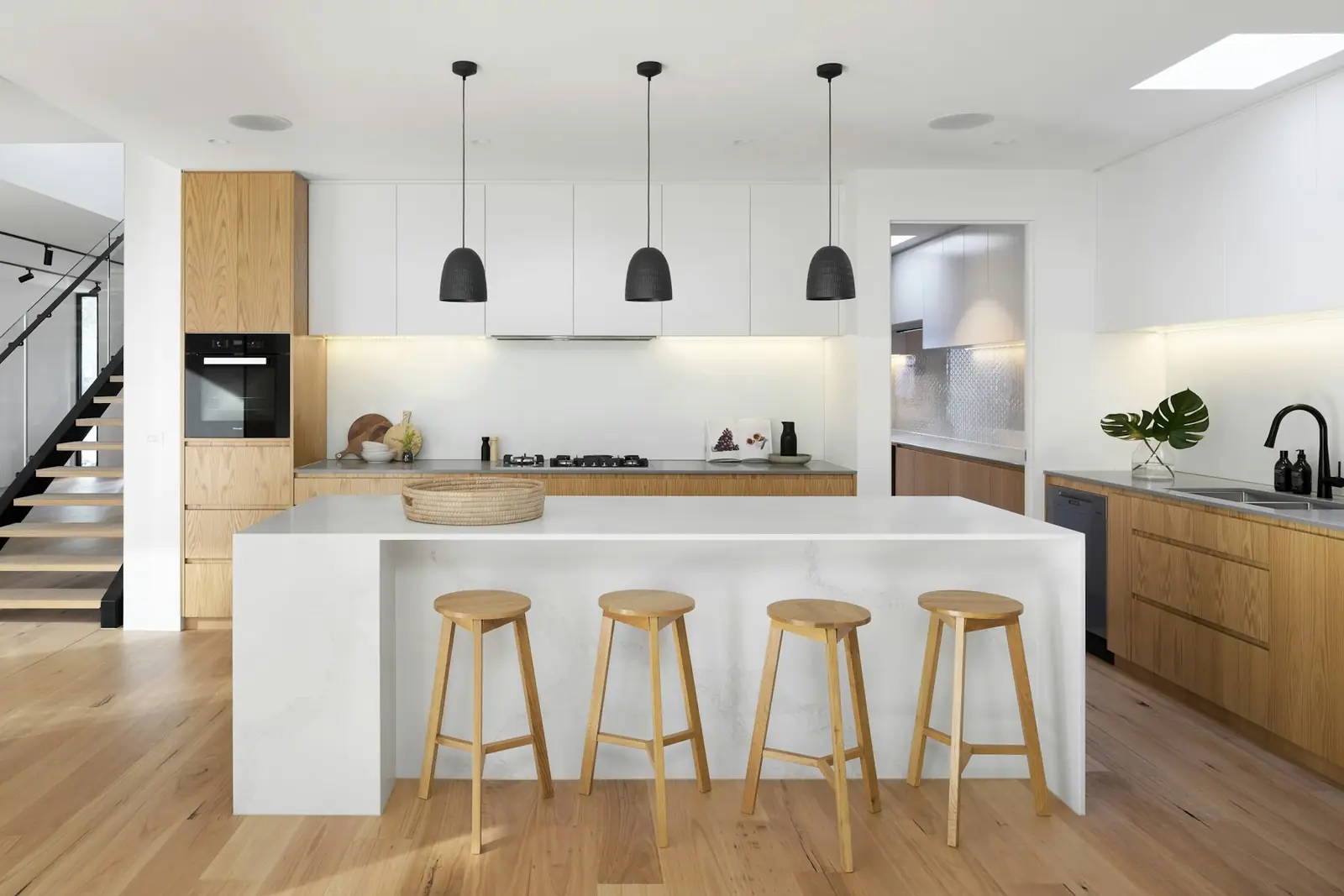
The photograph on this page is a reference for that wood-grain look. It shows a finish, not a brand that is stocked. The comparison with other floors lives on the flooring installation page.
Planks are usually floated with a locking edge or glued down. Floating floors need a flat subfloor and room at the perimeter to move. Glue-down floors need a clean, compatible slab or underlayment and the adhesive the manufacturer names. Mixing a random adhesive with a random plank is how seams open.
Layout is part of the job, not a decoration added at the end. Joints should stagger. Planks that start as a sliver at a doorway look accidental. Patterns such as a herringbone exist in some vinyl lines and take more material and more cuts than a straight lay. If you want a pattern, say so before the material is ordered.
Sheet vinyl flooring installation is still the right conversation for a small bath or laundry where every seam is a place for water. The sheet is cut to the room, fitted to the cabinets, and adhered. Seams, if the room is wider than the roll, have to be sealed the way the product requires. It is slower fitting work than clicking planks together, and it is a poor place to “save time.”
Many houses in Dallas sit on a concrete slab. Vinyl will telegraph ridges, paint drops, and old adhesive chunks. High spots get ground or patched with a compound the vinyl maker allows. A moisture or pH limit in the instructions is a real gate, especially under glue-down floors. Wood subfloors need to be fastened down so the new floor is not asked to hide a squeak.
Furniture, appliances, and toilets are scope items. Pulling a toilet to run vinyl through a bathroom is plumbing-adjacent. If the toilet has to come up, a licensed plumber should reset it. That reset is not hidden inside a flooring line.
Confirm flatness, cleanliness, and whether the old floor stays. Note transitions at tile, carpet, and exterior doors.
Some vinyl wants time in the room. Some does not. The carton instructions win over habit.
Lay the field, cut the last row, and cover the gap with base or shoe. Thresholds get a reducer, not a raw edge.
Wear layer thickness, attached pad versus separate underlayment, glue versus click, and the number of doorways change both material and labor. Closets count. So does a pantry with a lot of cuts. Send the room list and say whether the current floor is carpet, tile, or an older vinyl. If you are deciding between this and a wood image that is actually a wood-core board, read the laminate page before you order samples.
Luxury vinyl plank is a plank-shaped resilient floor, often with a wood image. LVT uses a tile format. Sheet vinyl comes in wide rolls with fewer seams. All three are vinyl flooring. The wear layer thickness and the core, not the nickname, tell you more about durability.
Many products are called waterproof because the plank itself does not swell like wood. Water can still travel through seams to the subfloor. A wet subfloor can fail even when the plank looks fine. Bathrooms and laundry rooms need the product rating and the seam plan, not a slogan.
The wear layer and core you choose, the square footage, old floor removal, floor flatness, underlayment, door casings, and transitions. A cost-per-square-foot average is not a quote.
Sometimes, if the old surface is flat, well bonded, and allowed by the new product. Cushioned vinyl, loose tile, and soft underlayment are common reasons the old floor has to come up. The estimate should say which path it is.
Next step
Name the rooms, the approximate sizes, and what should be finished. If the form cannot send, call or email instead.